
Evil as Inheritance
The Thing on the DoorstepThis thread follows the suggestion that occult harm is transmitted across generations, turning family history into a source of both explanation and renewed danger.
increasing Bearing strength in each event
 decreasing
Bearing strength in each eventdecreasingA Family of Dark Reputation
Evil as Inheritance
Reputation Before Relationship
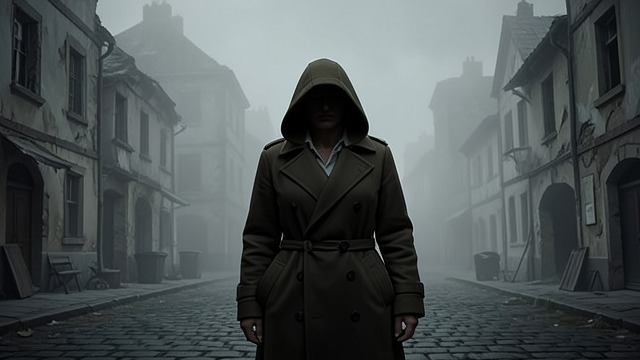
Asenath Waite arrives carrying the reputation of the Innsmouth Waite family, whose history is surrounded by fearful local stories. The rumors make her seem connected to a past that predates her relationship with Edward Pickman Derby, although reputation alone cannot prove what her family has done.
Her father, Ephraim Waite, is remembered as a formidable student of forbidden practices who died insane under troubling circumstances. His reputation gives the story a family history in which occult knowledge appears not merely learned but handed down through a household and its secrets.
Inheritance as Suspicion
Daniel Upton hears these accounts before he understands the danger within the marriage. They encourage him to interpret later events through the possibility of inherited practices, while remaining uncertain enough to preserve the question of whether fear has exaggerated the family’s past.
The family history thus functions as a warning rather than a complete explanation. It suggests that private evil can outlast any one person by surviving in stories, habits, and knowledge passed between generations.
The Father’s Unfinished Shadow
Evil as Inheritance
A Father Recalled
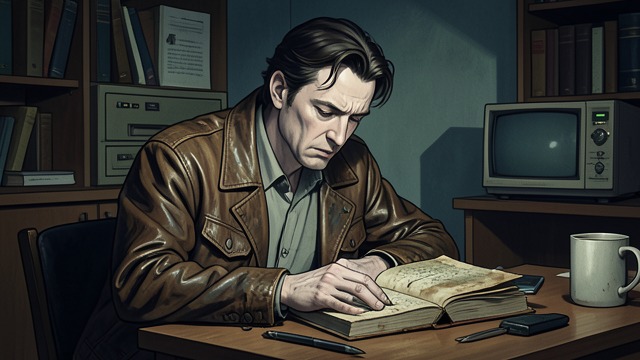
As Edward Pickman Derby becomes more disturbed, he repeatedly returns to the memory of Ephraim Waite and to the possibility that the older man’s influence has not ended with his death. He sees likenesses in expressions, handwriting, and manner that make Asenath Waite appear connected to something older than herself.
These impressions reach Daniel Upton as frightened, incomplete testimony. The uncertainty is important: Edward Pickman Derby is describing a possible inheritance of identity and intention, not offering a calm account that can be independently checked.
Knowledge Passed On
The forbidden material associated with Ephraim Waite provides a possible means by which the past can act in the present. The threat is not simply that a father’s reputation shadows a daughter; it is that techniques and ambitions may allow a previous will to persist through another person.
The story makes inheritance morally unsettling because it can mean more than influence or resemblance. It may involve the survival of a self that treats descendants not as independent people but as instruments for continuing its own life.
The Family Pattern Repeated
Evil as Inheritance
A Repeated Design
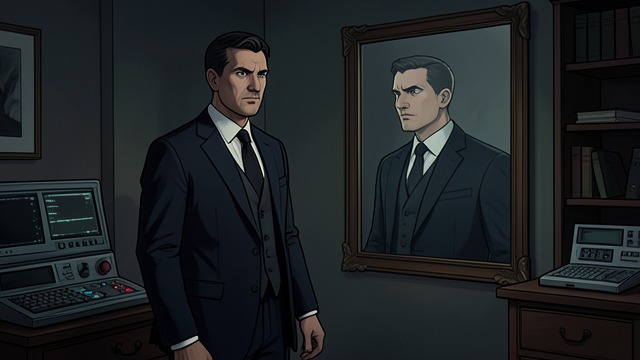
Edward Pickman Derby comes to believe that the events surrounding Asenath Waite repeat an earlier exchange involving Ephraim Waite. In his account, an older occultist used a younger person with a suitable mind and a comparatively weak will as the means to escape bodily decline.
That alleged history mirrors the danger Edward Pickman Derby faces himself. The possibility that Asenath Waite is seeking control of his body makes the earlier story feel less like an isolated family secret than a design capable of reproducing itself.
The Heir as Victim
Inheritance here reverses the expected image of a child receiving protection, property, or knowledge from a parent. The younger person instead becomes a resource whose body and mental qualities are selected for someone else’s continued existence.
The pattern makes family continuity a source of dread. If identity can be passed on through force rather than care, then a family line may transmit domination as readily as memory, leaving each generation exposed to the unfinished ambitions of the one before it.
Death Fails to End Inheritance
Evil as Inheritance
A Legacy That Acts
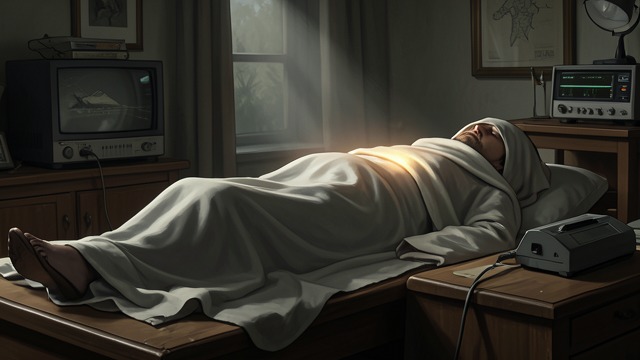
Edward Pickman Derby believes that Asenath Waite continues to act after her death, reaching across distance and seeking to possess his body. Her hidden corpse becomes the material remainder through which the past remains present and dangerous.
The episode turns inheritance into a literal continuation of agency. What should have ended with a death instead appears to survive through a chain of bodies, with each apparent escape opening the way for the same struggle to begin again.
The Chain of Occupants
Edward Pickman Derby’s account links Ephraim Waite, Asenath Waite, and himself in a sequence where one person’s effort to survive threatens to displace another. The chain makes individual ambition inseparable from the harm it passes forward.
Because the explanation comes through a desperate witness, Daniel Upton cannot treat it as established fact at once. Nevertheless, the possibility gives the story’s family history a terrible consequence: inherited evil may be active, not merely remembered.
A Warning Against Transmission
Evil as Inheritance
Knowledge as a Carrier
In his final message, Edward Pickman Derby urges Daniel Upton to keep clear of black magic, treating the pursuit of forbidden knowledge as a path into the same danger that has consumed him. His warning suggests that evil can be transmitted not only through families but through practices that invite powers people cannot control.
Daniel Upton’s account itself becomes another act of transmission. By telling what happened, he tries to protect others, even as the narrative preserves the very knowledge and names associated with the horror.
Containment Without Certainty
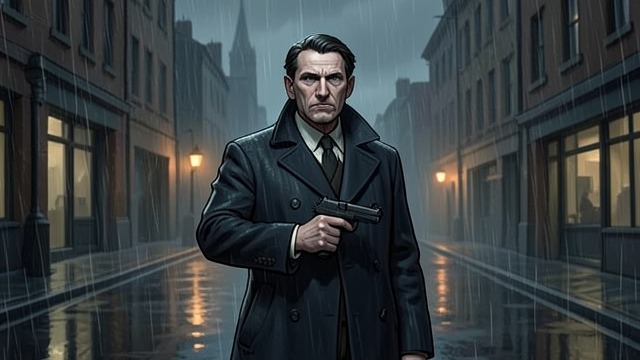
Daniel Upton shoots the body he believes is occupied by the surviving threat and demands cremation, seeking to interrupt the chain. These acts are attempts at containment, not proof that the danger has been erased.
The ending therefore leaves inheritance unresolved. A warning may pass from one person to another, but whether it breaks the cycle or merely carries fear forward remains uncertain, giving testimony both its protective purpose and its burden.
Before Asenath Waite’s arrival in Arkham
During the first years of Edward Pickman Derby’s marriage
As Edward Pickman Derby describes his growing captivity
After Edward Pickman Derby kills Asenath Waite
In Daniel Upton’s final account
